
This post's title says a raw diet makes weight loss easy. The second word deserves more attention than the first. The NHS says it straight out: losing weight is not always easy, and many things can affect your progress. One trial found weight loss tracked how well people stuck to a diet rather than which diet they followed, and a second found no clear winner between two diets.
Four branded diets, one year
In a trial published in JAMA in 2005 (PubMed 15632335), Dansinger and colleagues at Tufts-New England Medical Center in Boston randomly assigned 160 overweight or obese adults to four groups of 40. One group followed Atkins (carbohydrate restriction), one Zone (macronutrient balance), one Weight Watchers (calorie restriction) and one Ornish (fat restriction). After two months of maximum effort, people chose for themselves how closely to stick to their diet.
A year later the averages were close. Counting anyone who dropped out as having no change, weight loss was 2.1kg on Atkins, 3.2kg on Zone, 3.0kg on Weight Watchers and 3.3kg on Ornish. Those who completed the study did better.
Sticking with it was the real difference
Many didn't finish. Only 53% completed Atkins and 50% completed Ornish, against 65% for each of the other two. The authors described overall adherence as low.
Their key result is a pair of numbers. How much weight people lost was linked to how well they said they had stuck to their diet (r = 0.60), but not to which diet they had been given (r = 0.07). Sticking with a plan showed up in the results. Which plan it was barely did.
A bigger trial, no clear winner
Gardner and colleagues at Stanford ran the DIETFITS trial, published in JAMA in 2018 (PubMed 29466592). It randomised 609 adults aged 18 to 50 to a healthy low-fat or a healthy low-carbohydrate diet for 12 months, and 79% completed it. Health educators ran 22 small group sessions over the year, focused on reaching the lowest fat or carbohydrate intake that could be kept up long-term, with an emphasis on diet quality.
After a year the low-fat group had lost 5.3kg and the low-carbohydrate group 6.0kg. The gap of 0.7kg was not significant. The team also tested whether a genotype pattern or a measure of insulin secretion could predict who would do better on which diet. Neither did.
Reading a raw plan through that lens
Neither trial tested a raw diet. What they offer is a question to ask before starting one. Could you still be eating this way in a year, on workdays and at kenduri? If the honest answer is no, the Dansinger trial gives little reason to expect easy results from it.
The NHS takes the same line in its weight-loss advice, which is built around making small realistic changes to what you eat and drink, how much you move and how well you sleep. Its free NHS Weight Loss Plan app is a 12-week plan meant to help people build healthier habits.
Small and realistic can mean adding raw fruit and vegetables to meals you already eat, instead of swapping your whole kitchen for a blender.
Where dates come in
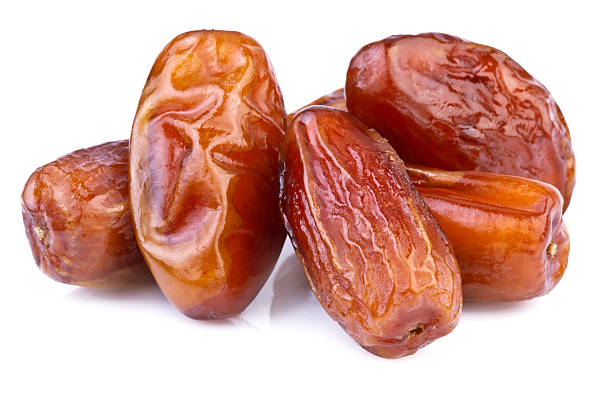
The older version of this post described a raw chocolate cake held together by Medjool dates. Dates are a concentrated food. USDA FoodData Central lists 100g of Medjool at 277 kcal, with 66.5g of total sugars and 6.7g of fibre. A 30g portion works out at about 83 kcal.
That 30g is the size the NHS uses. It counts a 30g portion of dried fruit, naming dates, as 1 of your 5 A Day, and says to eat it at mealtimes, not as a snack between meals, to reduce the impact on teeth. A habit like a few dates after lunch is small enough to keep for a year.

The older post also recommended nuts as a filling savoury snack. The page it linked to is kept here, for anyone who wants to find more information there.
Ordering dates
Kurma Online's about us page covers everything from retail purchases to wholesale supply, with delivery across the country. Enquiries, quotes and orders go through WhatsApp, and the number is on the contact us page, since the contact form is not available at the moment.
This article is general information, not personal advice. If you plan a big change to the way you eat, speak to your GP or a dietitian first.