
Most descriptions of dwarf hamsters cover size, colour and cage needs. This one starts with family life, because how dwarf hamsters behave towards mates and young shapes most of the care decisions an owner makes: who shares a cage, when to split them up, and why males and females are kept apart. The care advice below comes from the RSPCA's hamster pages. The behaviour comes from published studies on two dwarf species.
Three dwarfs among the five common pet hamsters
The RSPCA names five hamsters as the ones most commonly kept as pets: the Syrian, the Chinese, Campbell's Russian dwarf, the winter white dwarf and Roborovski's dwarf. Hamsters usually live for up to two years, though some live longer. They are burrow-digging rodents of dry, rocky plains and lightly vegetated slopes, and they build their nests inside their burrows.
On social life the RSPCA draws a line between species. In the wild, adult Syrian hamsters generally live in lone burrows, while other species, such as the Roborovski dwarf, naturally live in groups. When hamsters first meet they start to set up a hierarchy straight away, and the dominant animal can become very aggressive.
Two close cousins with very different fathers
Two dwarf species in the genus Phodopus are a useful pair to compare, because their males behave so differently around birth. Phodopus campbelli, which a 2010 Russian paper calls Campbell's hamster, is biparental, meaning the father takes part in raising the young. A 2006 study from Queen's University in Kingston, Canada, notes that male P. campbelli readily eat placenta, something that female mammals which have not just given birth generally refuse.
The same study looked at the Siberian hamster, Phodopus sungorus. Its males do not take part in the birth and do not respond to a pup that has been moved out of place. Inexperienced males and females of this species refused placenta. New mothers ate it on the day before and the day of the birth. Males accepted it soon after the birth, about 80% of them, but only those that had been present during the birth. Taste was not the reason for the species difference, the authors found, since P. campbelli accepted P. sungorus placenta. They read the refusals as a wary reaction to an unfamiliar food.
Not every male hamster turns into a father
Even in the paternal species, fatherhood is not automatic. A 2018 study at the National Autonomous University of Mexico worked with virgin male P. campbelli that were either paternal or aggressive, the aggressive group showing infanticidal behaviour towards pups. Castration did not change the behaviour of either group. When aggressive males were given estradiol and their levels of it rose clearly, they became paternal.
That does not make it a simple hormone switch. A 2007 review from Queen's University found that hormones and paternal behaviour do vary together in biparental rodents, but experiments, mostly on P. campbelli, suggest the link is not causal. Energy use seems to play a part too. In a 2016 Chilean study, raising a dwarf hamster's resting metabolic rate with L-tyrosine injections made males quicker to contact and pick up their pups.
What the research means for a cage at home
None of this is a reason to breed hamsters at home. The RSPCA strongly advises against mixing different species and sexes of hamsters. It also says not to house females near males, because females in season give off potent pheromones that frustrate the males, and not to house males near each other, since they mark territory with pheromones that can stress other males nearby.
Dwarf hamsters can sometimes share a cage in pairs or trios. The RSPCA's conditions are strict. The group should be formed early in life, ideally from young littermates, and should stay stable, with no new members added later. Even pairs that get on well at first may fall out later in life, and dwarf hamsters do not need company to be happy, so an owner who keeps two must be ready to house them apart.
Fights between cage-mates are most likely at night, when hamsters are active, so the RSPCA advises checking them every morning for injuries that need a vet. Hamsters don't play-fight. Any sign of a fight means separating them permanently into different cages, and the RSPCA does not recommend putting them back together. A shared cage needs lots of space, plenty of enrichment and multiple shelters, and for a pair the RSPCA says the number of hiding places should be one more than the number of hamsters.
Young hamsters have their own way of calling out. The RSPCA notes that pups that have fallen out of the nest, and hamsters looking for a mate, may give ultrasonic calls. Hamsters are very sensitive to high-frequency sounds that we can't hear, and they can find them stressful.
Food, fruit and where dates fit in
The RSPCA's diet for pet hamsters is a compound pellet ration or a mix of seeds, with small quantities of greens, cleaned root vegetables and pieces of fruit. Grapes and rhubarb should be left out, as they can be poisonous to rodents. Food can be scattered or hidden around the cage to encourage foraging, and hamsters may carry it in their cheek pouches to the nest to eat or store for later. They need a constant supply of fresh, clean water, preferably from a bottle with a valveless sipper tube.
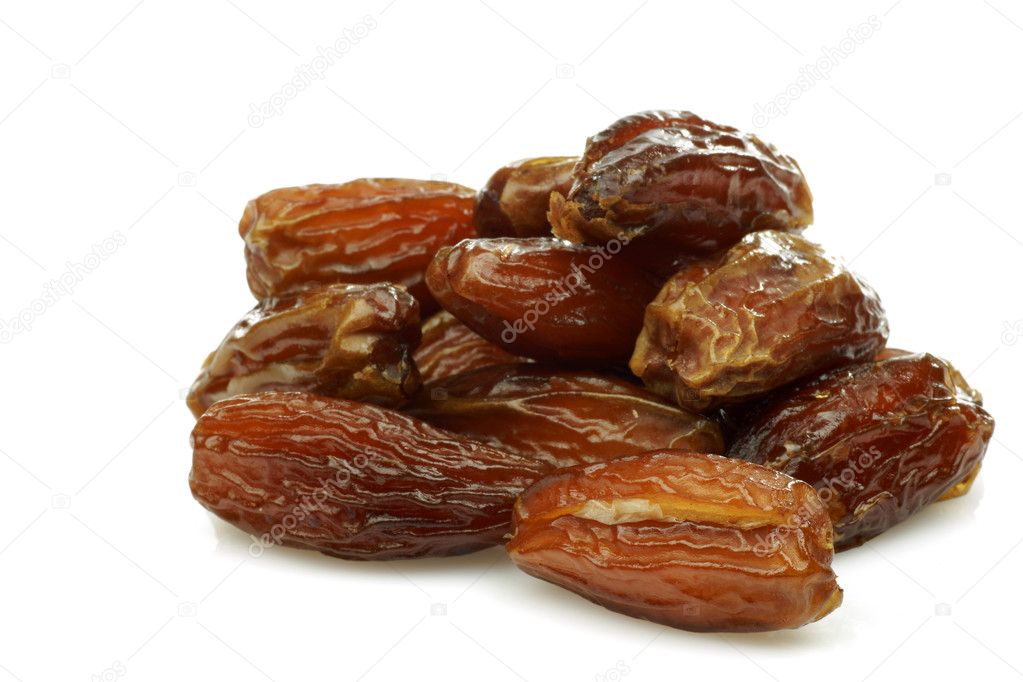
Dates are not on that list. They are also far sweeter than a root vegetable such as carrot. USDA FoodData Central gives 66.5g of total sugars per 100g of Medjool dates, against 4.74g for raw carrots, roughly 14 times as much. Anyone tempted to share a date with a hamster should know both things.
For the people in the house, Pemborong Kurma Green Diamond describes itself as a date wholesaler and supplier in Shah Alam, Selangor. On this site, the about us page explains who runs Kurma Online, more articles are on the Kurma Online blog, and questions can go through the contact page.