
In 2012 a Leeds team noted that few studies had looked at weight gain in UK universities. In 2019 a Belgian team wrote that no European data covered the full span of university. Both went on to measure students directly, and so did a team in Mexico. Every average they report is below the 15 lb (about 6.8 kg) in the nickname, and they add detail on which habits went with the extra kilos. Below are five pieces of research: four on first-year students (one of which followed them to their final year) and one on undergraduates in general. After that come the NHS weight-loss suggestions that fit a student's week.
Britain: under a kilo, and partly temporary
G. Finlayson's team at the University of Leeds measured 250 first-year students at four universities in England and Scotland (PubMed 22407132). Height, weight, waist and body composition were taken in a laboratory at the start of the year, at three months and at twelve months. Body weight rose by 0.83 kg on average. The authors describe the gains as significant but small and transitory.
The questionnaires the students filled in at the start were the more useful part. Changes in fat mass went with three eating traits: disinhibition, a strong pull from the "power of food", and binge eating. The authors sum this up as opportunistic eating and a tendency to overconsume. Physical activity was linked to changes in fat-free mass instead.
A second British study, from London, asked 481 first-year undergraduates to fill in a survey at the start of the year and again six months later, with height and weight asked as survey questions rather than measured (PubMed 30243053). Students who arrived with stronger eating self-regulation skills were more likely to keep or reach a higher fruit and vegetable intake and a lower intake of sweet and salty snacks. They also had smaller weight changes and were less likely to gain 5 percent of their starting weight. The authors say this was especially so for students with overweight.
Belgium: the first term and the last year
T. Deliens and colleagues at the Vrije Universiteit Brussel followed 340 Belgian university students from their first term to their final year, measuring them six times over four and a half years (PubMed 31721793). Individual changes ran from a loss of 5.2 kg to a gain of 15.7 kg. On average men gained 5.7 kg and women 2.2 kg, and 77.4 in every hundred students had a higher BMI by the end.
The timing is the useful part. Across both sexes, the biggest gains came in the first semester and again in the final year. The authors say efforts to prevent weight gain at university should not stop with freshmen but also cover senior students.
Mexico: one semester, and how fast students ate
At a public university in Culiacán, Sinaloa, 226 students aged 17 to 21 were assessed at the start and end of their first semester (PubMed 42040235). They gained 0.8 kg on average, in both sexes. In the raw comparison, students who took under 20 minutes to eat, or who lived in a rooming house without appliances, gained the most. In the full statistical model, though, only sex stayed significant, and the authors' conclusion points especially to men. They also say more research is needed to pin down which habits can be changed.
A US check on food habits
A team in Edwardsville, Illinois, built a scale for what they call food conscientiousness, a tendency to make healthier food choices (PubMed 40144990). The participants are described as undergraduates, not specifically first-year students. They reported gaining about 2 lb on average in the fall 2020 semester. Over the first two months, students high on the scale reported a gain of 0.24 lb, against 3.93 lb for those low on it. That link held whatever the students' living situation and whether or not they felt they had access to healthy food.
Suggestions to lose excess weight
None of these studies tested a diet plan, so the practical side comes from the NHS page of tips to help you lose weight. Its advice is to try one thing at a time and find what works for you. Several items on its list suit a student's week:
- do not skip meals, because you might end up snacking more when you feel hungry
- do not stock unhealthy food; the NHS names popcorn, fruit and rice cakes as healthier alternatives
- swap sugary drinks for water, with a slice of lemon or lime if you do not like the taste
- get active for 150 minutes a week, which can be split into shorter sessions
- if you are losing weight, aim for 0.5 to 1 kg a week and avoid sudden weight loss from diets
Two of the studies above sit close to those tips. In the four-university British study, gains in fat mass went with opportunistic eating and a tendency to overconsume. In London, students who started university with stronger eating self-regulation skills were more likely to keep sweet and salty snacks down, and they also had smaller weight changes.
If there are dates on the shelf
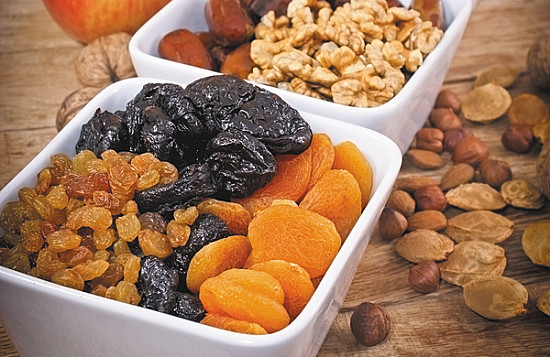
Dates count as fruit for the NHS, with one condition. A 30 g portion of dried fruit, such as dates, counts as 1 of your 5 A Day, but should be eaten at mealtimes, not as a snack between meals, to reduce the impact on teeth. USDA FoodData Central lists one pitted Medjool date at about 24 g, and Medjool at 277 kcal per 100 g, so one date comes to roughly 66 kcal. One or two with lunch fits the NHS advice. A box opened beside the laptop during revision does not.
Other articles on dates and food are on the blog. More about this site is on the About Us page and the contact page.
This article is general information, not personal advice. If you are worried about your weight or your eating, speak to your GP or a dietitian.